|
Green Country Public School offers a comprehensive learning programme that extends far beyond the confines of a classroom. We realise that each student is different and so our constant endeavour is to help each child realise his potential and discover new horizons. Every activity both inside and outside the classroom at Green Country Public School contributes towards the learning process in different, but equally meaningful ways. Children are strongly encouraged to participate in every aspect of school-life and receive support and guidance from experienced faculty members all the time.
Inside the Classroom
- With low teacher/ student ratio, every child receives the personal attention that he/she deserves and needs.
- Unique teaching methods are used to make learning an enjoyable, interactive and engaging process
- To build curiosity and confidence among children, innovative problem solving techniques, questioning and active participation in discussions are strongly encouraged.
- Exposures to socio- economic issues increase student awareness.
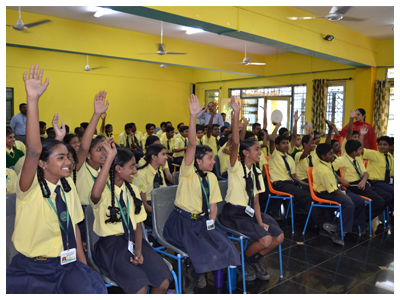
- Teachers encourage the children to think, question and freely express themselves during lessons and are approachable and friendly.
- A practical, or a project based approach to learning complements the traditional and theoretical forms of knowledge building
- Special emphasis is placed on enhancing language skills
- A broad range of subjects are taught to provide children with sufficient flexibility when choosing their area of specialization.
Outside the Classroom
- Yoga and prayer form an integral part of the curriculum so that students have a calm and clear mind.
- A mandatory co-curricular programme ensures that the students step out of their comfort zone and endeavour to learn new skills.
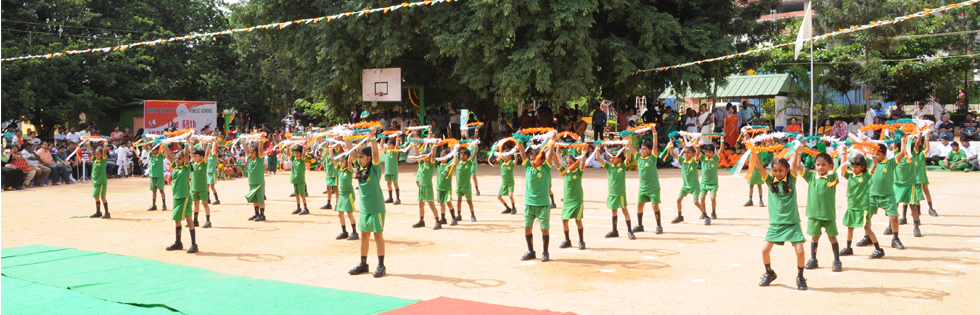
- Celebrations of national festivals and historic events, foster a spirit of togetherness amongst children.
- Inter-family and inter school competitions showcases the student’s talents and inculcate the spirit of loyalty and healthy competition amongst them.
- Excursions, field trips and off-campus activities are frequently organized to explore varied areas of interest.
- Children are encouraged to initiate and manage activities to bring together those with similar interests across academics , sports, arts and other areas.
- Eminent guests/ personalities often visit the campus to hold meaningful interaction with the students.
|
|
 |